Or, ‘you’re not just converting Catholics, are you?’

I have had this conversation a few times, and it’s something that’s been weighing on my mind from the moment that we decided to check out some teams in France. Actually, during one of the conferences we went to, the statistician literally said, “so, if you’re trying to reach the unreached, don’t go to France”.
France has a long history with Catholicism, and the Institut National de la Statistique et des Etudes Economiques (the numbers people) say that around 29% of people in 2020 still identified as Catholics. According to the Joshua Project, the number of ‘Christians’ may be as high as 70% of the French Basque (including Catholics, Orthodox, JW’s, Protestants, etc.). Pioneers, the mission organisation we’re going with, has a particular focus on reaching the unreached, who they define as “members of ethnic groups without a self-sustaining witness to the gospel in their own culture”, but it sounds like the Basque people have plenty of info already.
So, why bother being a missionary there at all?
Note: The Basque is a region of France and Spain that identifies as its own nation. I will try and be clear when I am speaking about Basque, France or both, as we are going to the part of the Basque in France, which speaks French and abides by French law, customs, etc.

- Among all Basque people, particularly young people, there is a rising trend in having no religion at all.
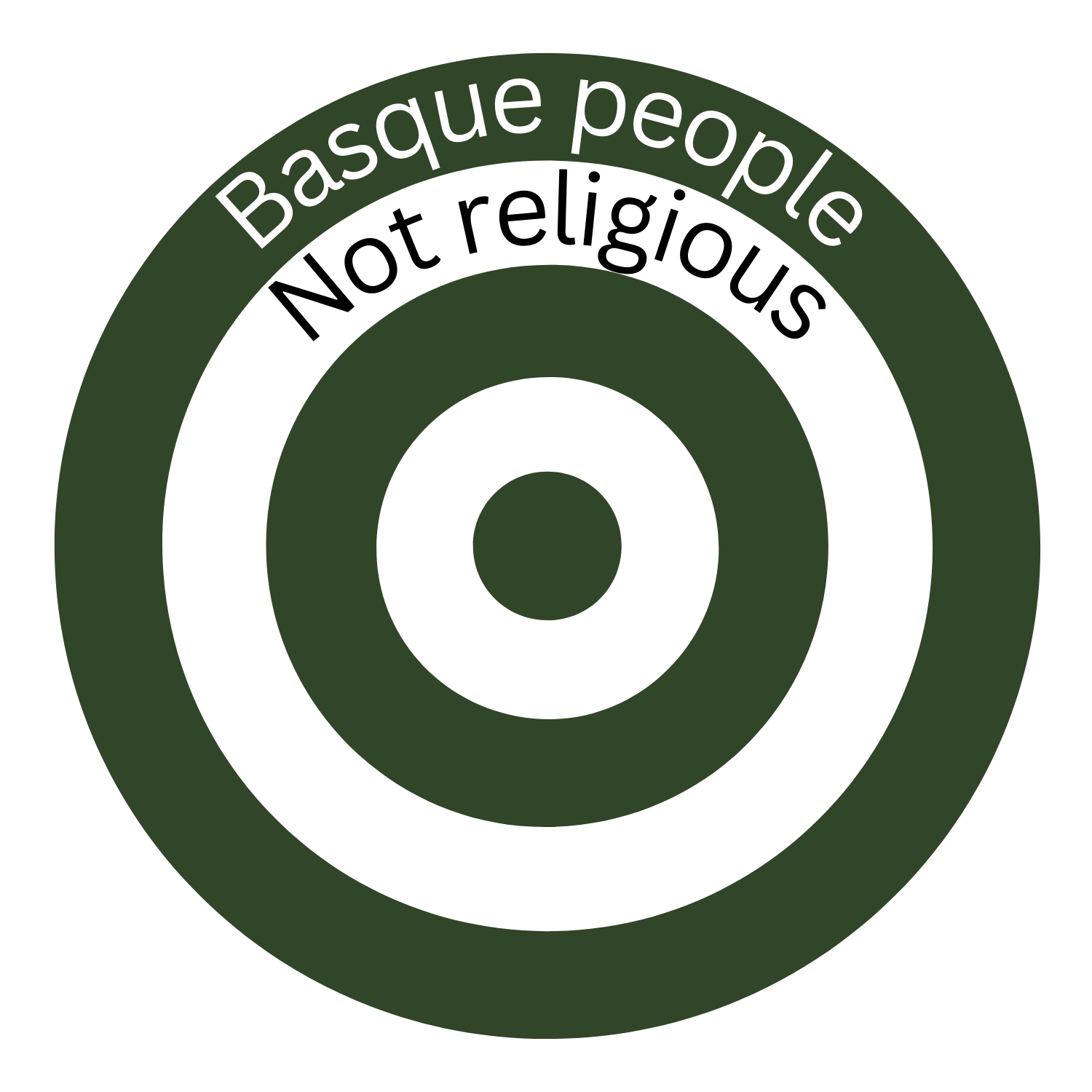
As of 2019‑2020, 51% of the population aged 18 to 59 in metropolitan France say they have no religion. This population is higher among people who aren’t immigrants or don’t have immigrant parents (people who have been in France for a few generations).
As for the Basque, according to the Basque Youth Observatory, who carry out sociological research amongst the people group (including both French and Spanish Basque), in 2012:
…The percentage of atheists or agnostics among young people (54%) doubles the percentage among older people (23%).
While some people are really disappointed when there is a clear decline of religion in statistics (the same thing is happening in Australia), I think it’s actually a good sign that people are willing to be more vulnerable and realistic with how they interact with religion. However, it does mean there is a large population who are not engaging with religion – they aren’t seeking it, or talking about it. It is not a part of their life, although arguably everyone has a worldview.
Because of the shift away from religion in general, laws against evangelising in public/government places, and a gradual acceptance of no religion, the majority of France isn’t coming into regular contact with the good news. They are not likely to bump into a witness who can openly strike up a conversation about faith; therefore, they are effectively unreached.

- Although some people identify as religious, not everyone actually practises their faith.

This is where the Joshua Project stat comes in. They say 70% identify as Christian, but 1% of those people are identified as ‘evangelical’*, which means willing to practice, share and commit to their faith. The other 69% may be nominal or Catholic. Another organisation, Crossroads, puts the number of evangelical Christians at 2%.
Referring to the Basque Youth Observatory again, they note that one third of Basque youths aged 15 to 29 (34%) identified as Catholic, but only 4% defined themselves as practising Catholics. This number is higher amongst older people and declined from 1998-2008, and then again from 2008-2012. It is continuing to decline.
Comparing the data on Basque youths from 2012 with those for people aged 30 and over in the same period, we can see that the percentage of those who consider themselves Catholic among people aged 30 and over double the figure for young people (71% and 34%, respectively).
So, you’ve got a group of people who might be spiritually curious. Their faith might be important to them, such as the 347,578 who took the pilgrimage through the Basque in 2019 (45% citing religious reasons), or they might just call themselves that because their families go church every Easter and Christmas. While the numbers seem large, and it seems like the Basque has access to the gospel, this group doesn’t have evangelical Christians to talk to, and doesn’t let their life affect their day to day practice. The opportunity is there, but there is no one to reach out to them. (Matthew 9:37)

- Within the religious group, there are those trying to earn their salvation.
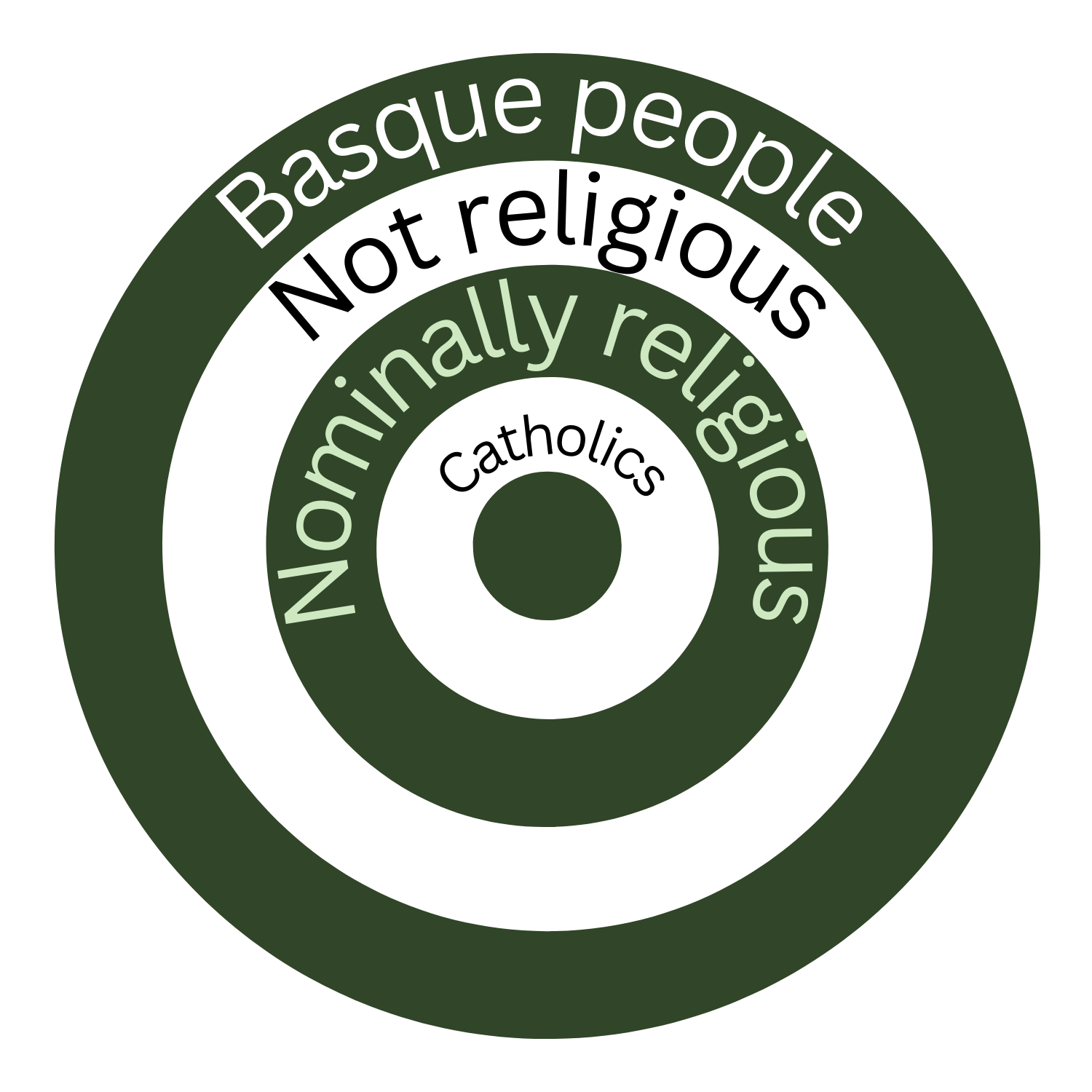
According to the study mentioned before, by the Insititut National de Statistique, 29% of the general French population, aged 18-59 identify as Catholics. According to the Basque Youth guys, 4% of Basque youths take that faith seriously. However, there are deep theological differences between Catholicism and what Christians see as ‘the good news’.
The Catholic church has a long tradition of telling people things they can do to take away their own sins, or take away those sins for them, such as being able to pay off your sins with cash moneys (these were called ‘indulgences’), being able to have a priest forgive you instead of asking Jesus directly, the existence of purgatory (a space between heaven and hell where you sort of get punished for your sins even though you’ve been forgiven) which your family could pay to get you out of there (note the running theme of owing money to the Catholic church).
Around 500 years ago (in 1517), a man with a bowl cut (probably) called Martin Luther nailed his 95 problems with the Catholic church to Schlosskirche (Castle Church), Wittenberg. If you would like to read a list of all 95, you can click here. It sums up nicely why most Christians would say they’re not Catholics. His protesting started a movement of churches called Protestants.
So, within this group of people who actually really, really care about what they believe, there is a group who still hasn’t been reached by the good news. They have a version of it – they have access to buildings and essentially the same Bible, and preachers who have gone to school to learn how to teach from those Bibles. But they don’t know that they don’t have to do all that extra stuff. They are saved already, and they don’t have to be afraid of purgatory, or hell, or never being quite good enough.
Being a missionary to Catholics isn’t about getting them to change which building they walk into on a Sunday. It’s about telling people that they are saved, and free, in Christ. It is offering an alternative to the fear and guilt they might associate with church, or the Bible. It’s good news, and they don’t have anyone to tell them.

- A group who knows what they believe, and why they believe it.
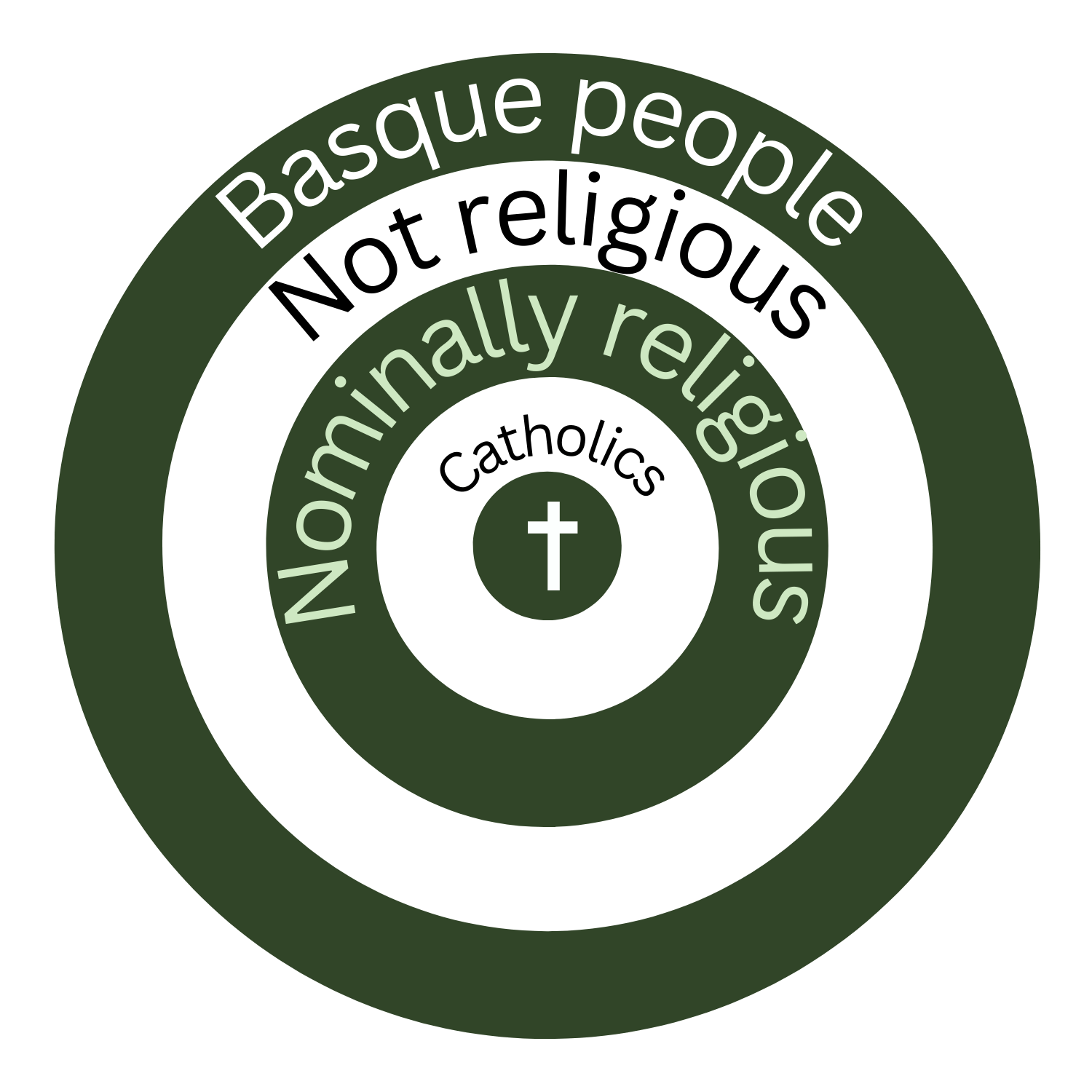
The 1%. Maybe 2%, if we’re being optimistic.
Out of all those people in the Basque, there is a tiny group of people who know the good news that Tom and I know. And we want to go to tell the other 99% of the Basque, but it’s also important to reach the reached.
These are people who know the good news and really care about it, and can be encouraged by having other people come alongside them. We spent days with local believers envisioning how we could be helpful, in the local church, neighbourhood and school, surrounded by mostly older believers who have been working tirelessly to do all they can to tell those around them the good news. Our goal is to plant a church somewhere else in the Basque so that local believers can attend and not have to travel to the coast. Having new people to meet, make friends with, pray with and read the Bible with is a big part of building a community that is reflected in the Bible’s depiction of church (see Hebrews 10:24-25).
Conclusion
It was tempting to write this using the metaphor of the sower and the seeds- the non-religious are the rocky ground, the nominals are the shallow ground, the Catholics are getting their faith choked by all the extra things and then you’ve got the fruitful ground. However, what I’m really trying to get across is that there is no one sowing the seed. There are all these people and they are not coming across the gospel in their every day life. Some haven’t heard it, some don’t understand it, and some live and breathe it in isolation.
The purpose of being a missionary isn’t to get people to join your team or come to your building on a Sunday instead of another. The purpose is to spread the good news, and there are plenty of people in the French Basque who haven’t heard the good news yet.
We aren’t trying to force everyone to be Christians. However, we are genuinely heartbroken by the fact that we have this knowledge that has changed our lives, and there are people across France who don’t know it, don’t understand it, or don’t believe it.
If you declare with your mouth, “Jesus is Lord,” and believe in your heart that God raised him from the dead, you will be saved. For it is with your heart that you believe and are justified, and it is with your mouth that you profess your faith and are saved. As Scripture says, “Anyone who believes in him will never be put to shame.”For there is no difference between Jew and Gentile—the same Lord is Lord of all and richly blesses all who call on him, for, “Everyone who calls on the name of the Lord will be saved.”
How, then, can they call on the one they have not believed in? And how can they believe in the one of whom they have not heard? And how can they hear without someone preaching to them? And how can anyone preach unless they are sent? As it is written: “How beautiful are the feet of those who bring good news!”
Romans 10:9-15
So yes, we really do think the Basque needs missionaries.
Pray:
- That the Lord would send more missionaries to the Basque, and to France. I mentioned Matthew 9:37 earlier – “The harvest is plentiful, but the laborers are few” – Jesus follows it up in v38 with “therefore pray earnestly to the Lord of the harvest to send out laborers into his harvest.”
- That as a church we would have courage to share with those around us in a country where we are allowed to.
- For Tom and I, as we learn more about the Basque culture and how to help the church and needs as we find them, not as we think they should be met.
Notes:
In the Basque, the minister of the church we visited mentioned there is also a small group who practise pagan rituals and beliefs, although it seems like the folklore might be more culturally than religiously significant. (I did a lot of research for this article, but I got the vibes surrounding Basque paganism from this Reddit page, which at least gave me the perspective of younger people.) More research to be done.
*The Joshua Project definitions page defines ‘evangelical’ as:
Followers of Christ who generally emphasize:
- Commitment to Biblical preaching and evangelism that brings others to faith in Christ.
- The Lord Jesus Christ as the sole source of salvation through faith in Him.
- Personal faith and conversion with regeneration by the Holy Spirit.
- A recognition of the inspired Word of God as the only basis for faith and living.
 Divine Voyagers
Leave a comment